
These defensive classes are so hard to blog about. Techniques are definitely easy to teach with photos and video, but luckily this is our last week before returning to a more eco style format. So I’ll do my best to recap what we covered.
Introduction: Kimura defense really comes down to two big important concepts. The first is the need to keep our hand in front of our body. The second being the idea that I can offer up a favorable position as a trade to escape the submission. As always we have two defined situations when we are in a submission 1) defense 2) escape. To defend a kimura we just need to prioritize keeping our arm/hand in front of our body. If we keep things simple and continue to move our body to our hand we can greatly reduce the risk of being submitted. This typically moves to our escape concepts.
Drilling: We started our drilling block with a very simple task. Offensive person is trying to put our had behind our back with a kimura grip, defender is simply trying to maintain a grip on their jacket, pants, or a hand to hand grip.
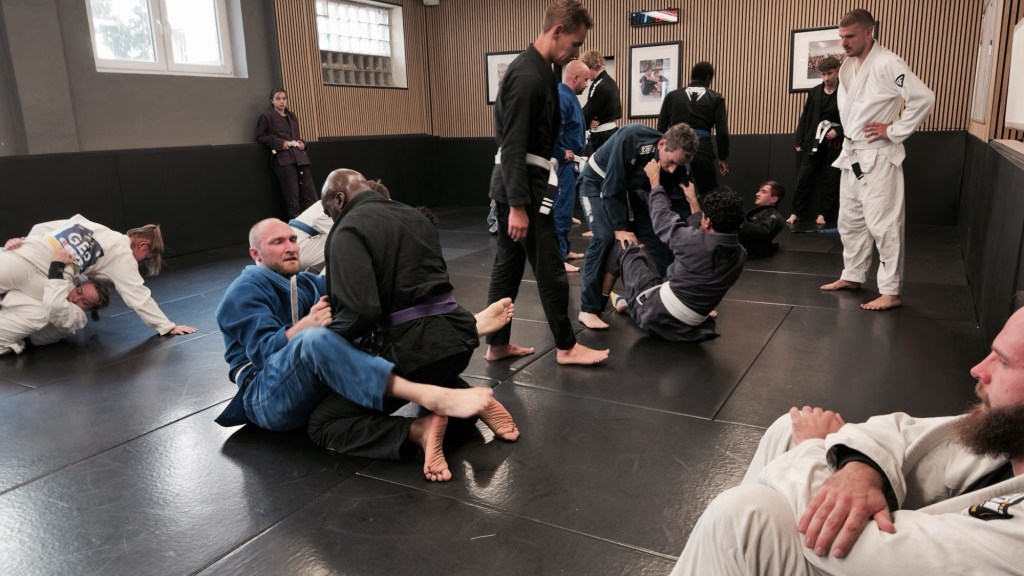
Discussion: Lots of success here, but mostly because the entire room is new to this. I wouldn’t necessarily call this a false positive, but it certainly isn’t a scenario that would look the same against blue belts. But this is how it starts, we begin with defending against our peers, then grow from there. One of the strongest functions of the kimura is its ability to keep us connected to our opponent while transitioning through a number of great positions. So we have to keep that in mind when it comes to defense. Our number one goal when we are in a submission is simply to extend the length of the match. Often times that means we escape a submission only to end up in a terrible position, but we have been successful in extending the match. That has to be our primary goal. With the kimura our opponent has great attacks on our back if we defend in the wrong way. So I need to make keeping my back flat on the mat as my second priority if I am on bottom and I need to maintain posture if I’m on top.
Drilling: In this section I want the defender to not only defend the submission, but try to force the attacker to abandon the kimura for a dominant position. An example would be top player is attacking a kimura and the bottom person forces the to let go of the kimura grip in favor of taking mount.
Conclusion: As with every class in this block, proficiency is impossible in 1 hour. My goal with these short offense and defense blocks is just to give the students a few tools to use in their live rounds. I want them to be familiar with both the attacks and how to defend them in an attempt to lengthen their matches. As we progress into more sparring based classes next week I would hope to see a measured improvement in both submission attacks and submission defense. This will be very important as the next block will cover an introduction to outside passing and camping.


Leave a Reply