Defense vs escape, something I talk about often. We have a bad habit of thinking these are the same things. When we talk about armbar defense the goal is to position ourselves in a way that the armbar is no longer a threat. The goal being, our opponent opts to move to a secondary attack. This is by far the safest way to deal with submissions, but it relies on two important ideas. The first being our opponent will abandon their primary attack in favor of a secondary attack. The second being we are working with either a match without points or an undefined round time. In a submission only match we may find an opponent who is happy to hold onto a submission and ride out the end of the match, thus potentially winning a decision. So it’s important to understand the connection between defense and escape.
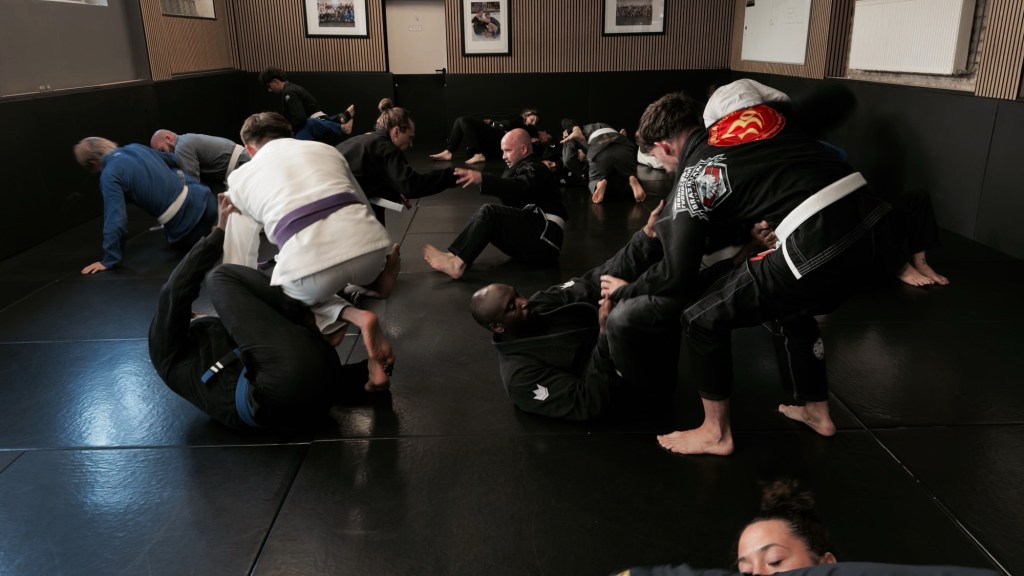
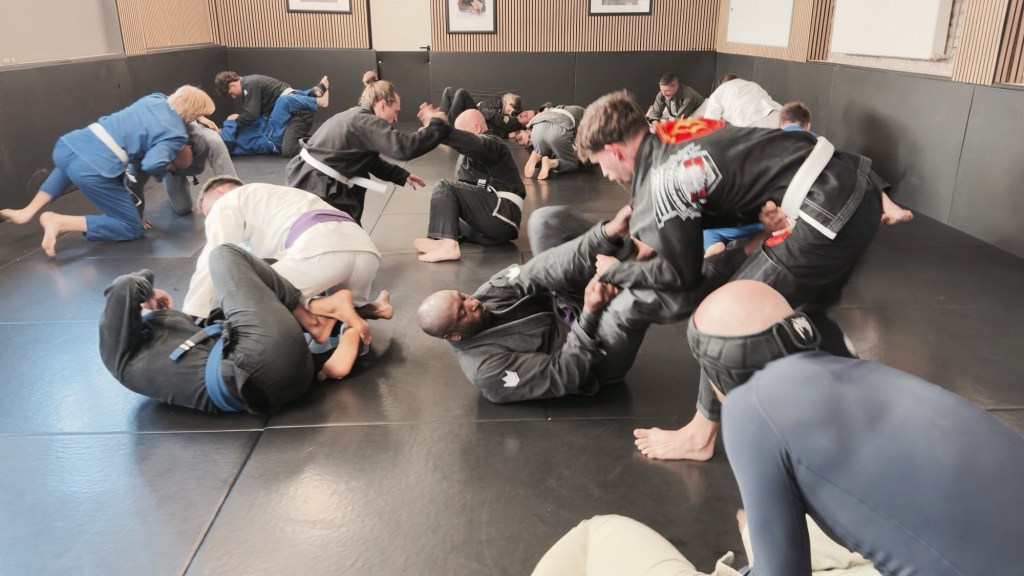
Our class started with a break down of how our secondary arm helps to protect the arm that is the primary threat. For this I had the students start in an armbar, their goal was to play with different grips to stop their opponent from breaking the grip and straightening their arm. We worked in pairs for this class with the drills being cooperative.
Discussion: The students naturally explored different grips, mostly working with a 10 finger (S grip) or a gable grip. So for our discussion I talked about the different layers of grips. The 10 finger grip being the last stop before the grip is broken. The next layer would be a gable grip. This grip has been proven for decades to be a very strong grip that is very hard to break, the problem with this grip is it allows our arm to be straightened without our opponent breaking our grips. So we progress to our third layer, which is the butterfly grip. This grip provides stability, strength and helps to reduce the chances of our arms being extended. However, I didn’t want the students to stop there. The preferred defense grip is ultimately the figure four grip (rear naked choke). This grip allows us to use the power of our attacker to our favor.
A good defensive grip alone is not enough to stop a good attacker. So we need to revisit the rule I keep talking about in class “if our opponent moves twice before we move once we are losing”. This is incredibly important here. If we move into our defensive shell and just maintain that position our opponent will certainly find a way to break through. So we have to be actively defending. Every time our opponent adjusts their attack we adjust our defense. 1 for 1, without fail. With the goal being our opponent moving to a secondary attack, this is our time to switch from defense to escape.
Drill: The task was simple, work with your partner cooperatively but with increasing intensity. Get into your perfect armbar defensive shell and don’t get arm barred. I asked the students to not escape, only defend. As the drill progressed the attacker should steadily increase their pressure. Ultimately I would hope this drill would get to a point of failure for the defender. This is important because we have to understand that defense can very rarely be permanent.
So now we know we can defend, at least for long enough to withstand the initial attack. What’s next? We have to go for an escape. But just as we talked about on Monday, all offense costs some defense. So when we decide to actively escape we are taking a risk. It’s up to you to decide if the risk is worth it. Sometimes we wait for our opponent to move to the next attack and use that moment to escape, sometimes we make our own opportunity and go for it. I would hope you all know me well enough to know what I’m going to do haha.
The arm bar escape we talked about is by far my favorite escape. It’s one I’ve used at the highest levels of competition. I’ve always said it was the “take off my sweater” escape, which of course to the reader means nothing, I may have talked about it on a globetrotters video at some point. You’ll have to dig through the archives to find it and its not super possible to explain in this text. Just know it’s ridiculous, it works, and it will make your opponents very frustrated. I even got to see it in use yesterday at a local tournament. One of my blue belts did it perfectly in the middle of a match and escaped the armbar almost immediately.
Conclusion: like everything else, risk vs reward is king. There are times when we need to find a place of defense and wait out the storm. Other times we need to act quickly and get out of trouble before things get worse. It’s up to you to decide which direction you take.


Leave a Reply