This practice was a tough one for me. I want to repeat the last practice while adding a few details, but I don’t want to overwhelm the students with guard retention dogma. The class begins with a brief explanation of the focus, defining terms and then we move into our pods
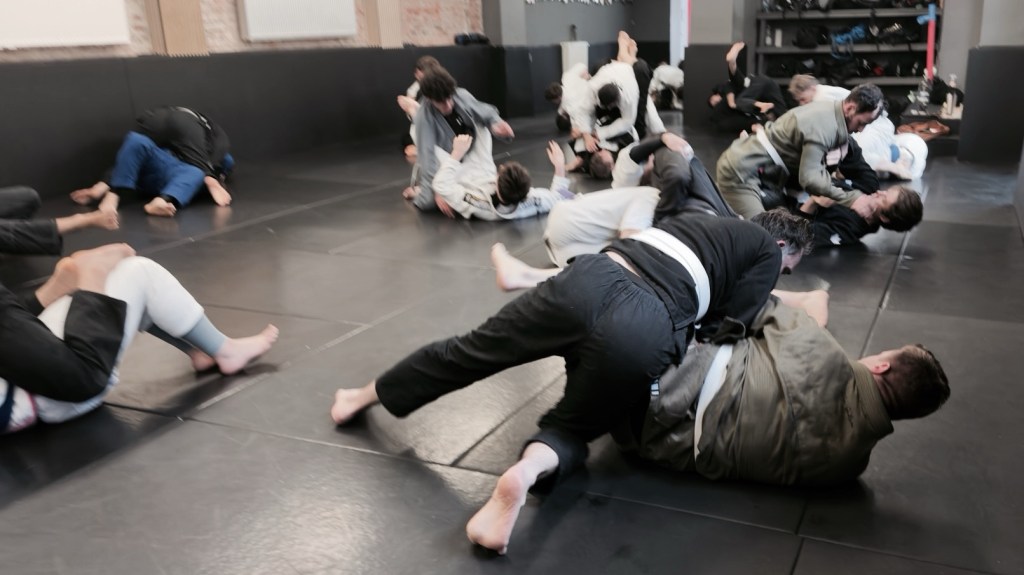
Game 1: This is a repeat of the second game from day one. Bottom player stays in for 3 minutes with a few tasks, first they can maintain a guard position for 3 minutes, second they can close their guard, and third they can stand up or take a topside position (sweep). The task of the top person is to pass guard and pin chest to chest.
Discussion: Today I really wanted to focus on not giving up. Something I see way too often in training rooms. I often refer to competing, even if a student never plans to compete because it sets the tone of urgency in the rounds. They have a specific task with a defined timeline. For instance, today the scenario was this: bottom person is ahead by 2 points with 30 seconds left in the match. Top person is desperate to score points before time runs out to win the match. This also lets me talk about not giving up, even when a big move has been made. Once top player has beaten the legs the match is not over, they also need to solidify the position. Meaning bottom player has 3 seconds to recover guard or reverse to a topside position. I need the students to understand the importance of this, from both top and bottom positions. The best time to recover is in that first 1 to 3 seconds after a guard pass, once the top person has stabilized it becomes way more difficult. So I need both players to be pushing this idea to the maximum. I don’t want the rep to be ended early, in fact I want both players to be trying to cheat, by pushing just how long the rep should go on. This means its the job of the inactive players to stop the action when they see fit.
Game 2: No changes to the game, simply a replay of game one with a new sense of urgency.
Conclusion: Another really strong class. It’s hard for me to not flood the students with techniques, I still find myself inclined to demonstrate. Ultimately the students need to struggle and they need to problem solve on their own terms. I can guide them and make corrections but I don’t want to slip into the habit of thinking everyone is going to do something a specific way. Not only have these practices been more fun for all skill levels, but I think the progress I’m seeing on the mats is greater than I have seen in the past. It’ll be interesting to see what happens as we get deeper into the curriculum. Specifically what happens next block. I’m a bit worried that submissions will be difficult to gamify with the beginners so I will take a different approach to that


Leave a Reply